
07.11.2023. Order Granting Defendants’ Motion to Dismiss
10.31.2023. Amicus Brief of Manhattan Institute in Support of Appellant
11.06.2023. Amicus Brief of 23 States in Support of Appellant
11.06.2023 Amicus Brief of Our Duty in Support of Appellant
11.06.2023 Amicus Brief of the Justice Foundation in Support of Appellant
11.06.2023 Amicus Brief of Foundation for Moral Law
01.02.2024 Appellee’s Answering Brief
Protect parental rights.
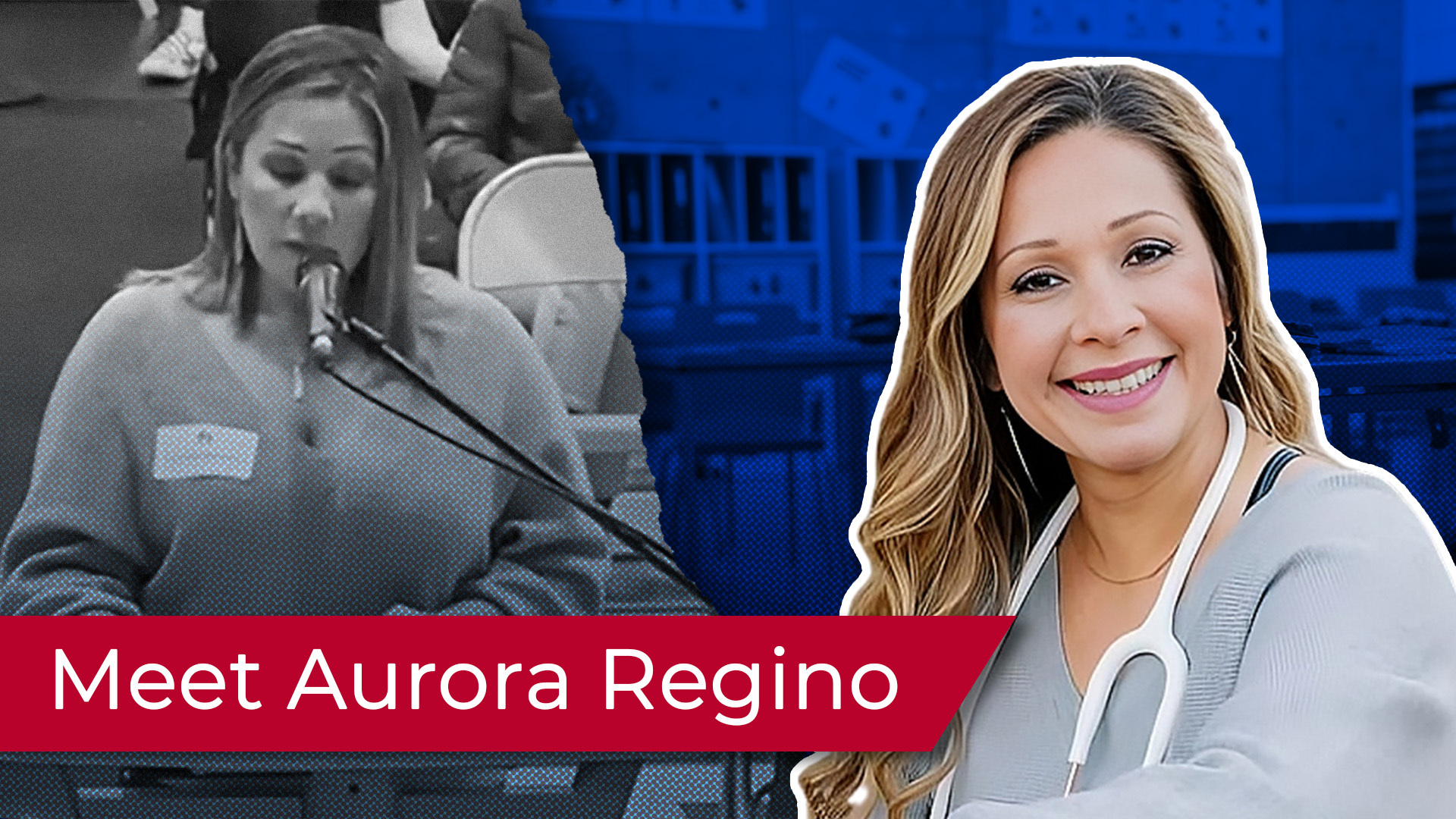
This lawsuit is a challenge by Aurora Regino, a California mother, against Kelly Staley, the Superintendent of the Chico Unified School District. Aurora claims that the district’s policy of socially transitioning students at school — and withholding that information from parents — violates her constitutional rights as a parent.
Regino v. Staley is currently on its second appeal at the Ninth Circuit. Briefing was completed on April 27, 2026, and the case is awaiting oral argument.
What Happened to Aurora Regino’s Daughter
Aurora’s daughter, A.S., was a 5th grader at the Sierra View Elementary School when she began experiencing significant emotional distress. She had recently faced her grandfather’s death and her mother’s battle with cancer, and was suffering from depression and anxiety.
In December 2021, A.S. began to feel that she “might be a boy.” By early 2022, she confided in a school counselor that she felt like a boy. It took the school guidance counselor minutes to decide that A.S. really was a boy.
At the end of the meeting, the counselor walked A.S. back to class and informed the teacher that A.S. would now go by the name “J.S.” and male pronouns, which the teacher and other staff began using for A.S.
Over the next few months, A.S. met with the school counselor additional times. The counselor provided A.S. information about a local LGBTQ+ support group and discussed topics like top surgery and breast binding.
In one of these spring 2022 meetings, A.S. said she wanted to tell her mother about identifying as a boy. The counselor discouraged her from doing so.
In April 2022, A.S. instead disclosed her new gender identity to her grandmother, who then informed Aurora Regino of what had been happening.
In the months that followed, Aurora raised concerns with school officials and sought assurances that the secret “social transition” would not happen again. It was at an October 2022 meeting with Superintendent Staley that she first learned of the formal district policy on transgender student information.
California’s Parental Secrecy Policy
The school never notified Aurora that this transition was happening. That silence was not an oversight — it was the policy.
Chico Unified School District’s Administrative Regulation 5145.3 (“Nondiscrimination/Harassment”) prohibits school staff from disclosing a student’s gender identity to anyone — including parents — without the student’s written consent. The regulation tracks official California Department of Education guidance interpreting California Education Code § 221.5, the statute amended by Assembly Bill 1266 (2013).
AB 1266’s text says nothing about parents. It guarantees students the right to participate in school activities and use facilities consistent with their gender identity, “irrespective of the gender listed on the pupil’s records.”
The notification gap was created by the CDE, whose guidance instructs school districts to honor a student’s claimed identity at school and conceal it from parents unless the student consents to disclosure. Hundreds of California districts have adopted the same approach.
California has since gone further.
In July 2024, Governor Newsom signed Assembly Bill 1955 — the SAFETY Act — which took effect January 1, 2025. AB 1955 prohibits school districts from requiring employees to disclose a student’s gender identity to parents, codifying the secrecy framework that Aurora is challenging.
In 2025, the U.S. Department of Education found that the California Department of Education violated FERPA by hiding student gender transitions from parents and designated the practice a “priority concern” in a Dear Colleague Letter to state superintendents.
Regino v. Staley directly challenges AR 5145.3 — and, by extension, the broader California framework AR 5145.3 implements.
The Constitutional Argument
Under 42 U.S.C. § 1983, Aurora filed suit against Chico Unified Superintendent Kelly Staley and members of the school board. Regino v. Staley seeks declaratory and injunctive relief on three constitutional grounds:
Substantive Due Process
The district’s policy violates Aurora’s fundamental parental rights by excluding her from critical decisions about her child’s care, custody, and control — including medical and psychological care connected to the district’s social transitioning activities.
Procedural Due Process
The district deprives Aurora of a protected liberty interest in her parental rights without due process, providing no notice and no opportunity to be heard before a student is socially transitioned at school.
Right of Intimate Association
By keeping her child’s gender identity secret from her, the district violated Aurora’s right to family integrity and intimate association with A.S. without any compelling justification.
Case Timeline
January 6, 2023 – Lawsuit Filed
Aurora Regino filed a federal complaint against Superintendent Kelly Staley in her official capacity and other school board members. The trial court dismissed the school board members that Aurora Regino named in her lawsuit, which Aurora did not appeal. This left Superintendent Staley as the primary defendant in the case.
February–March 2023 – Preliminary Injunction Denied
After briefing and a hearing on February 28, 2023, the U.S. District Court (Senior Judge John A. Mendez, E.D. Cal.) denied the preliminary injunction, finding that Aurora failed to show a likelihood of success on the merits of her constitutional claims.
July 10, 2023 – District Court Dismisses Case
Judge Mendez granted the district’s motion to dismiss Aurora’s First Amended Complaint with prejudice. The court held that the complaint did not allege a clearly established fundamental right, and that the district’s policy therefore implicated no constitutional right and passed rational-basis review.
July 20, 2023 – Appeal to Ninth Circuit Court of Appeals
Aurora Regino filed a notice of appeal to the Ninth Circuit. The federal appeals court heard oral arguments on May 9, 2024.
April 4, 2025 – Ninth Circuit Reverses Dismissal
A three-judge panel of the Ninth Circuit issued a published opinion vacating the lower court’s dismissal and remanding the case for further proceedings. The appellate court held that the district judge applied erroneous legal standards in analyzing the substantive and procedural due process claims.
The panel directed the lower court to properly analyze whether the parental rights Aurora asserted are “deeply rooted in history and tradition” (the correct standard for fundamental rights) and to consider whether she alleged any liberty interest (fundamental or not) sufficient to trigger procedural due process protections.
January 15, 2026 – Case Dismissed on Remand
On remand, the case was assigned to a new U.S. District Judge. After Aurora filed a Second Amended Complaint and further briefing, the court granted the district’s renewed motion to dismiss and again dismissed all claims with prejudice.
The court concluded that even under the proper legal tests, the school district’s non-disclosure policy does not violate any parental constitutional right.
Current Status: 2026 Appeal
On January 16, 2026, Aurora Regino filed a timely second appeal of the district court’s January 15, 2026, dismissal. The case is now docketed at the Ninth Circuit as Regino v. Blake, et al., No. 26-475. The appeal seeks to reverse the trial court’s decision based on the following claims:
- The court misapplied substantive due process standards after the April 4, 2025, remand.
- The court erred in concluding that existing parental rights cases do not apply to school-initiated confidentiality concerning gender identity-related information.
- The court applied the wrong legal standard by adopting an overly broad view of school authority and student privacy that precludes meaningful parental involvement.
- The court erred in classifying the district’s policy as passive confidentiality instead of active interference with parental rights
- The court improperly precluded procedural due process protections that the Ninth Circuit acknowledged in its April 2025 opinion.
Aurora’s opening brief was filed on March 6, 2026. Briefing was completed on April 27, 2026. The case has not yet been assigned to a panel for oral argument.
Why This Case Matters
Aurora Regino’s lawsuit is one of many cases now testing whether public schools may keep parents in the dark about a child’s gender identity at school.
Aurora challenges the heart of the policy: the secret social transitioning of minor children at school and the deliberate withholding of that information from their parents.
Underlying Aurora’s Constitutional arguments is the belief that social transitioning in schools is not a neutral act but one of active intervention. Its use among children and adolescents falls squarely within parents’ fundamental right to guide their children’s healthcare.
Montana and 22 other states have filed amicus briefs in support of Aurora’s case, demonstrating nationwide concern for parental rights. Additional support comes from organizations including the Center for American Liberty, the Manhattan Institute, Defending Education, the Foundation for Moral Law, and Our Duty.
Related Cases
Other ongoing cases the Center for American Liberty is involved in that bear on the subject of gender transitioning include:
- Hein v. UNMC, a detransitioner case involving the University of Nebraska Medical Center’s gender affirming care program that rushed a 16-year-old girl into a cosmetic double mastectomy and massive testosterone hormone exposure.
- Chloe Cole v. Kaiser Foundation Hospitals, a California detransitioner lawsuit with facts similar to those of Luka Hein (double mastectomy surgery coupled with testosterone cross-sex hormone exposure in the guise of gender-affirming care).
How You Can Help in the Fight Against Gender Transitioning in Schools and Medicine
The Center for American Liberty is a non-profit organization that depends on donations to sustain its work to defend the civil liberties of Americans who have been left behind by other, legacy civil rights organizations.
These include Aurora’s daughter, A.S., and our other clients, Luka Hein and Chloe Cole.
If you can help support our efforts, please see our donation page for more information.